Newmarket and Aurora Lawn Care Services
Lawn care in Newmarket and Aurora isn't the same as lawn care in Mississauga or down by the lake. The soil is different, the water runs the other way, and spring shows up later. GreenEarth Canada is a family-owned York Region landscaping company, and we've built our lawn care program for the conditions you actually have here, not a generic Ontario lawn plan.
We do four things, and we do them at the right times of year: aeration, overseeding, fertilizing, and weed control. Done in the right order with the right products, your lawn comes back thicker every year instead of thinning out.
Free Quote, No Pressure
Why Lawns in Newmarket and Aurora
Need a Different Approach
The reason your lawn behaves the way it does has more to do with what's underneath it than most homeowners realize.
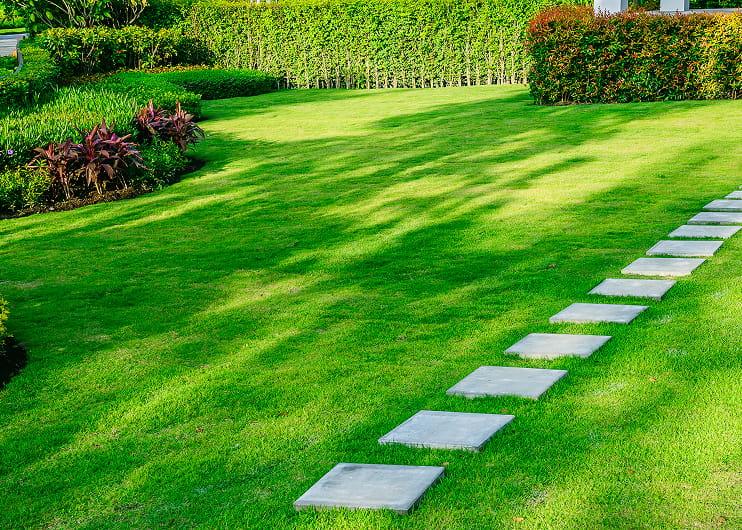
Parts of Newmarket and Aurora sit on or near the Oak Ridges Moraine, a ridge of sand, gravel, and stony till that runs through this part of the province. The moraine is also the watershed divide. For most properties here, water that lands on your lawn doesn't drain south toward Lake Ontario the way it does in Toronto. It runs north, through the East Holland River and its tributaries, into Lake Simcoe. That changes how a lawn here should be fed.
Then there's the soil itself. Higher parts of Aurora are on or close to the moraine, with sandy soils that drain well but lose nutrients fast in a hard rain. Much of the lower surrounding landscape is influenced by Newmarket Till, a stony sandy-silt layer that, in our experience, compacts hard under foot traffic and drains slowly after a heavy storm. As a landscaping company that has dug, graded, and excavated across the region for years, we've seen properties where the front yard and the back yard had noticeably different soil because the moraine boundary cut through the lot. Same fertilizer, same water schedule, two different lawns.
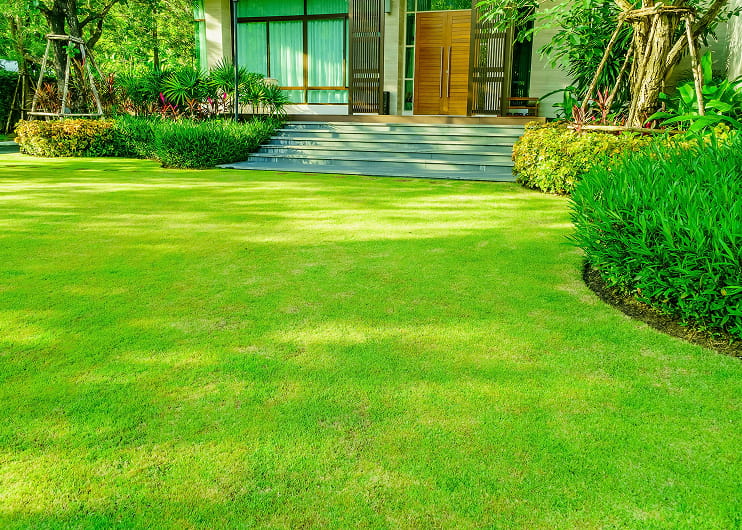
The third factor most homeowners don't think about is elevation. Aurora averages around 260 to 290 metres above sea level. Toronto's waterfront is closer to 76, though the city rises higher to the north. That kind of difference is enough that spring up here can lag the lakeshore, often enough to affect when fertilizer should go down. Putting product down too early is one of the most common mistakes we see. The grass isn't ready, the soil isn't warm enough, and the fertilizer washes away in the next rain.
Finally, there's Lake Simcoe. The Lake Simcoe Protection Plan, in place since 2009, sets a real phosphorus reduction target for the watershed, and lawn fertilizers are a named contributor. The local conservation authority, the LSRCA, recommends phosphate-free fertilizer for properties in the watershed. We pair that with a 6 to 8 centimetre mowing height, which is a common best practice for reducing nutrient runoff. That's how we run our program. Not because we have to, but because it's the right approach when your runoff ends up in the lake.
The Four Pillars of a Healthy Lawn
in Newmarket and Aurora
Every property we work on gets walked and assessed first. There are no one-size-fits-all packages. But every healthy lawn we maintain across the area is built on the same four services.
Lawn Aeration
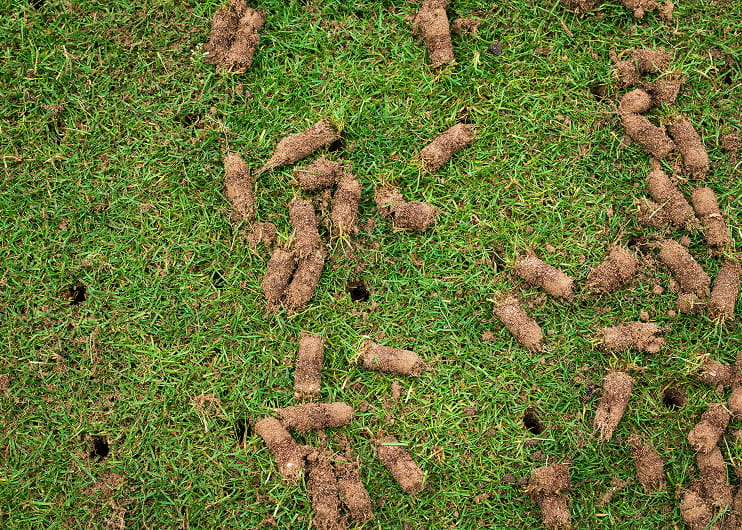
The till areas through Newmarket and central Aurora compact hard over the course of a season. After a winter of frost heave and a wet spring, the soil gets so tight that water beads up on the surface instead of soaking in. Roots can't push down, and fertilizer runs off.
Core aeration pulls plugs of soil out of the lawn, two to three inches deep, so air, water, and seed can finally get in. We use walk-behind core aerators, not the spike-style ones that make compaction worse. Fall is the best time for most properties. Spring works too on lawns that take heavy foot traffic.
Lawn Overseeding
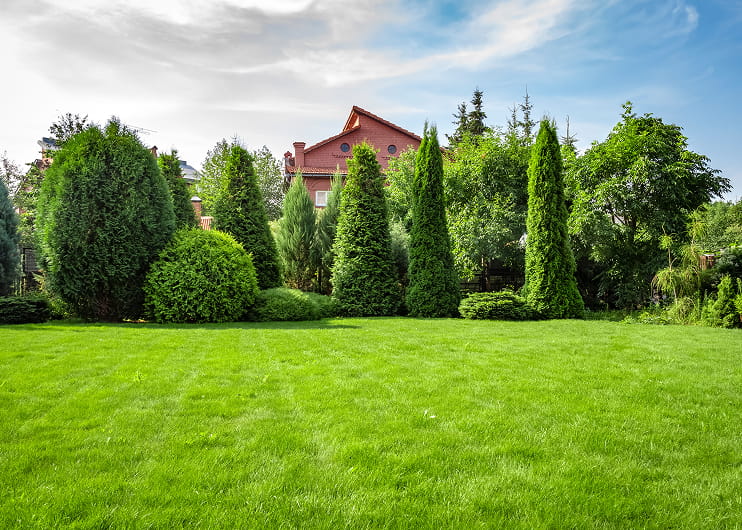
Even a healthy lawn loses density over time. Dog spots, dry summers, kids in soccer cleats, shade from maturing trees. Anywhere the lawn thins, weeds will move in.
Overseeding means broadcasting fresh seed into the existing lawn, usually right after aeration so the seed lands in the open holes. We use a Kentucky bluegrass, fine fescue, and perennial ryegrass blend matched to Zone 5b. The bluegrass spreads on its own through rhizomes and fills bare spots over a couple of seasons. The fescue handles the dry, sandy areas common on moraine properties. The ryegrass germinates fast and holds the lawn together while the slower grasses establish.
Lawn Fertilizing
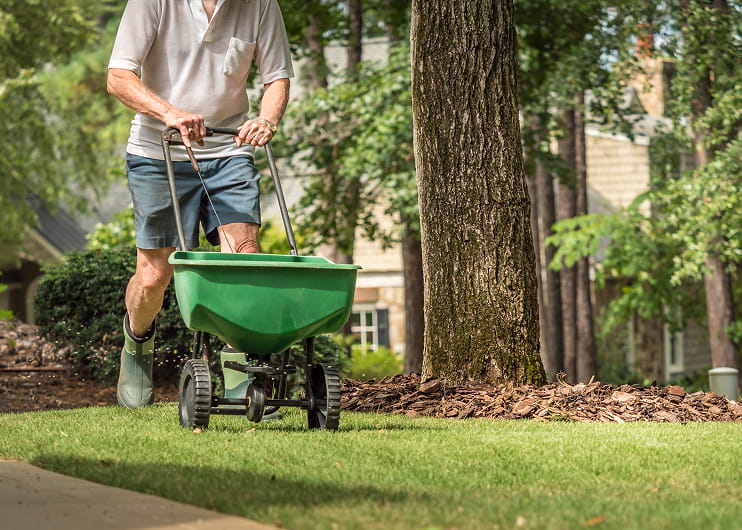
Fertilizing is where most homeowners run into trouble. Too much product, the wrong formulation, or the wrong time of year. We run a four-step program timed to soil temperature and the local growing season. Spring application after the soil reaches 12 to 15 degrees, usually mid-May up here. A light summer feeding. The big fall feeding in September. And the most important application of all, the late October or early November round that builds the root reserves the grass uses through dormancy.
Every product we use is phosphate-free. We're in the Lake Simcoe watershed. We do this for every customer whether they ask or not.
Weed Control
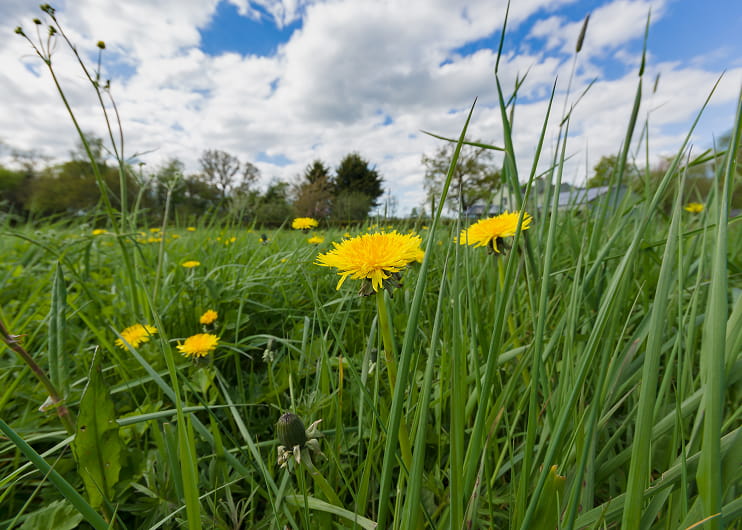
Ontario's Cosmetic Pesticide Ban has been law since 2009. The chemical herbicides homeowners remember from the 90s, including the old Killex formulations, are no longer permitted for cosmetic use on residential lawns. Any company telling you otherwise is operating outside provincial law, and you don't want them on your property.
What actually works in 2026 is iron-based bioherbicides like Fiesta, on Ontario's Allowable List. Corn gluten meal as a natural pre-emergent in spring. Hand pulling for the stubborn ones. And the most important piece, building a lawn so thick that weeds can't get a roothold in the first place. We'll explain exactly what we use and what to expect.
Our Newmarket and Aurora Lawn Care Calendar
A great lawn comes from doing the right thing at the right time, not from doing more. Here's what a full year looks like.
-
April
The first walk-around of the season once the ground is firm enough. We pull off the winter leaves, dethatch where the grass mat is more than half an inch thick, and check for snow mould (those grey or pinkish circular patches where the snow piled up the longest). Salt damage along driveways and along the city sidewalk gets flagged for a flush and overseed later in spring.
-
Mid to Late May
The first fertilizer application goes down once the soil is warm enough, usually mid-May in our area. Properties on the moraine warm up a bit faster than properties on heavier till. Spot weed treatment begins on dandelions and creeping charlie as they show.
-
June Through August
Mowing is the whole game in summer. We hold cool-season grass at 3 to 3.5 inches, or 6 to 8 centimetres, which is a common best practice for properties in the Lake Simcoe watershed. Taller grass shades the soil, holds moisture, and crowds out crabgrass before it can germinate. A light summer fertilizer application goes down in late June. Through July and August we monitor for chinch bugs along south-facing front yards and for white grubs anywhere we see skunks digging at night.
-
September
The biggest month of the year. Core aeration first to break up summer compaction. Overseed straight into the open plugs while the soil is still warm enough for fast germination, usually 10 to 14 days at September soil temperatures. Then a balanced fall fertilizer. A lawn that gets the September program right starts the following spring two steps ahead of one that didn't.
-
Late October and November
The single most important application of the year, sometimes called the winterizer. The grass takes the nutrients down into the root system and stores them through dormancy. Lawns that get this come out of winter dramatically thicker. Lawns that miss it spend May playing catch-up.
Common Lawn Problems We See
Across Newmarket and Aurora
Most of the calls we get fall into one of these categories.
White Grubs
Japanese beetle and June bug larvae feeding on grass roots through summer. The patch turns brown and lifts up like loose carpet when you tug it. Skunks and raccoons digging at night is the dead giveaway. Strong, well-fed turf fights it off. Bad cases need targeted treatment.
Chinch Bugs
They thrive in hot, dry, south-facing front yards. Boulevard strips and properties on the moraine where the soil dries out fast are the most common spots we see them. The damage starts at the edges of the lawn and works in.
Snow Mould
Grey or pink circular patches in spring where the snow piled deepest. Rake them out, get the spring fertilizer down, and they're typically gone by the end of May.
Crabgrass
It almost always shows up where the lawn was thin to begin with. The fix isn't a special spray. It's aerating and overseeding until the lawn is dense enough that crabgrass can't germinate.
Dandelions, Clover & Creeping Charlie
Standard broadleaf weeds. We knock them back with what's legal under Ontario law and build the turf so the next wave doesn't get a foothold. See our weed control approach for the full breakdown.
Salt Damage
Common along driveways and the city sidewalk after a long winter. It needs a flush with water in spring, sometimes a gypsum application to pull the chloride out of the soil, and then targeted overseeding into the dead strip.
Dog Spots
Concentrated nitrogen in dog urine burns the grass in circles. Flush the spot with water, reseed it, and you're back in business in a few weeks.

-
Jordan and his team did a fantastic job.
From quote to completion there was excellent communication. They put in an interlock patio, arranged for tree removal and drilled down the stump, cleaned up our overgrown garden and put in sod. All the work was done quickly and the results were great!
Rated 5 out of 5 stars
Sarah Newmarket, ON
-
Jordan did a phenomenal job...
I hired Jordan and his crew for snow removal after three others ended poorly. Jordan did a phenomenal job and always went above and beyond what was contracted. Looking forward to dealing more in the future.
Rated 5 out of 5 stars
Jessie Aurora, ON
Frequently Asked Questions About
Lawn Care in Newmarket and Aurora
When should I book my lawn care for the season?
Get on the schedule by mid-April. We start the spring walk-around as soon as the ground is firm. Booking ahead means you're on the calendar before the rush.
Do you offer one-time service or a full season program?
Both. Most customers go with a seasonal program because it's more cost-effective over the year and the lawn does better. We're also happy to provide a one-time fall aeration, a single fertilizer round, or a one-off weed control visit. Just tell us what you're looking for.
Are the products you use safe for kids and pets?
Yes. Everything we apply is on the Ontario Allowable List under the Cosmetic Pesticide Act. Our weed control program runs on iron-based bioherbicides like Fiesta and natural products like corn gluten meal. We provide post-application instructions on when it's safe to be back on the lawn.
What about the Ontario Cosmetic Pesticide Ban? Can you still treat my weeds?
Yes, legally. The old harsh chemicals haven't been permitted on residential lawns since 2009. We use what is allowed, paired with proper mowing and overseeding so the lawn itself crowds weeds out. Any company offering the old products is operating outside provincial law.
Why do you only use phosphate-free fertilizer?
Because we're in the Lake Simcoe watershed. Phosphorus runoff from lawns is a documented contributor to algae problems in the lake, and the Lake Simcoe Protection Plan and LSRCA both flag lawn fertilizer as a target for reduction. Phosphate-free formulations work fine on established lawns. There's no good reason to put phosphorus down here.
How long does it take to fix a problem lawn?
Most thin or weed-heavy lawns turn the corner within one full season. Lawns in worse shape need a more aggressive renewal: aeration, overseeding, and fertilizing in fall, then a follow-up the next spring. We'll give you a realistic timeline after we walk the property.
Do you service rental properties and small commercial lots?
Yes. Residential, rental, small commercial, and multi-property contracts. Get in touch for a quote.
Will I be charged for an estimate?
No. Quotes are free, and you'll get a written estimate before any work starts.
Can I just get one of the four services?
Absolutely. We recommend the full program for the best long-term result, but we'll come do a single fall aeration or a one-off fertilizer round if that's what you want.
Ready to Get Started?
Whether your lawn needs a complete season program or just one service for a specific issue, we're happy to come take a look. Free quote, no obligation, and a real conversation about what your property actually needs.
Request Your Free Lawn Care Quote Call (905) 503-3000