Lawn Fertilizing in Newmarket and Aurora
The Two Things Most Homeowners Get Wrong
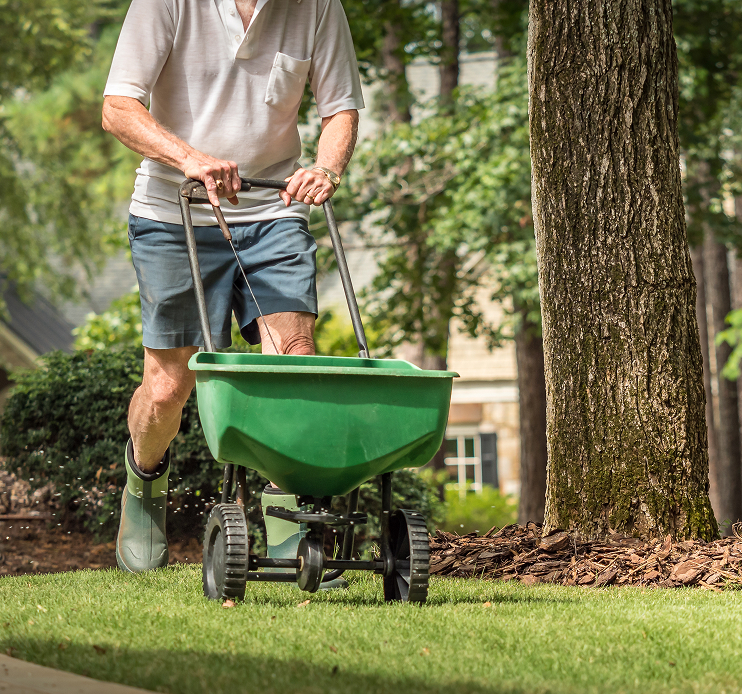
Fertilizing is where most lawns either thrive or fall behind, and it's also where most do-it-yourself programs go off the rails. The two mistakes we see most often:
- Putting product down too early in spring. Big-box stores stack fertilizer pallets at the front door starting in late March, and homeowners apply it as soon as the grass starts looking green. The problem is that the soil up here in Newmarket and Aurora isn't actually warm enough yet for the grass to use it. Aurora averages around 260 to 290 metres above sea level, well above Toronto's waterfront elevation of about 76 metres, and that higher elevation can put spring back compared to the lakeshore, often enough to affect when fertilizer should go down. Product applied to cold soil mostly washes away in the next rain.
- Using a phosphorus-heavy fertilizer. The middle number on the bag (the P in N-P-K) is phosphorus. On established lawns in the Lake Simcoe watershed, you don't need it, and the runoff actively contributes to problems the lake is already dealing with.
These are the two issues our program is built to avoid. Fertilizing is one of the four pillars of our Newmarket and Aurora lawn care service, and it's the one with the most local-specific reasoning behind how we run it.
We're in the Lake Simcoe Watershed
The single biggest local fact about fertilizing lawns in Newmarket and Aurora is also the one most homeowners haven't thought about: water that lands on your lawn doesn't drain south to Lake Ontario the way it does in Toronto. The Oak Ridges Moraine is the watershed divide, and we sit on the north side of it. Your runoff flows through the East Holland River and its tributaries into Lake Simcoe.
The Lake Simcoe Protection Plan, on the books since 2009, sets a 44 tonne per year phosphorus reduction target for the watershed. Lawn fertilizers are explicitly named as a contributor. The Lake Simcoe Region Conservation Authority (LSRCA) recommends phosphate-free fertilizer for properties in the watershed. We pair that with a 6 to 8 centimetre mowing height, which is a common best practice for reducing nutrient runoff from lawns.
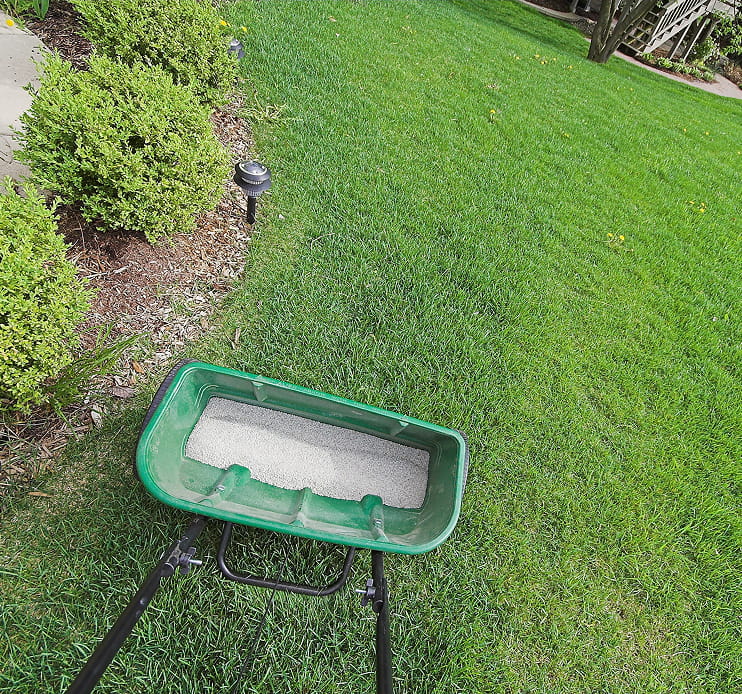
This is how we run our program. Every product we use is phosphate-free. Every customer, no exceptions. Established lawns don't need additional phosphorus to be healthy because the soil already contains enough, and adding more just sends the excess into the lake.
The exception is a brand-new lawn being seeded for the first time. New seed does benefit from a starter fertilizer with phosphorus applied directly into the seed bed where it stays put. For established lawns, which is most of what we maintain, phosphate-free is the right call both environmentally and agronomically.
We're in the Lake Simcoe Watershed
The single biggest local fact about fertilizing lawns in Newmarket and Aurora is also the one most homeowners haven't thought about: water that lands on your lawn doesn't drain south to Lake Ontario the way it does in Toronto. The Oak Ridges Moraine is the watershed divide, and we sit on the north side of it. Your runoff flows through the East Holland River and its tributaries into Lake Simcoe.
The Lake Simcoe Protection Plan, on the books since 2009, sets a 44 tonne per year phosphorus reduction target for the watershed. Lawn fertilizers are explicitly named as a contributor. The Lake Simcoe Region Conservation Authority (LSRCA) recommends phosphate-free fertilizer for properties in the watershed. We pair that with a 6 to 8 centimetre mowing height, which is a common best practice for reducing nutrient runoff from lawns.
This is how we run our program. Every product we use is phosphate-free. Every customer, no exceptions. Established lawns don't need additional phosphorus to be healthy because the soil already contains enough, and adding more just sends the excess into the lake.
The exception is a brand-new lawn being seeded for the first time. New seed does benefit from a starter fertilizer with phosphorus applied directly into the seed bed where it stays put. For established lawns, which is most of what we maintain, phosphate-free is the right call both environmentally and agronomically.
Slow-Release versus Quick-Release
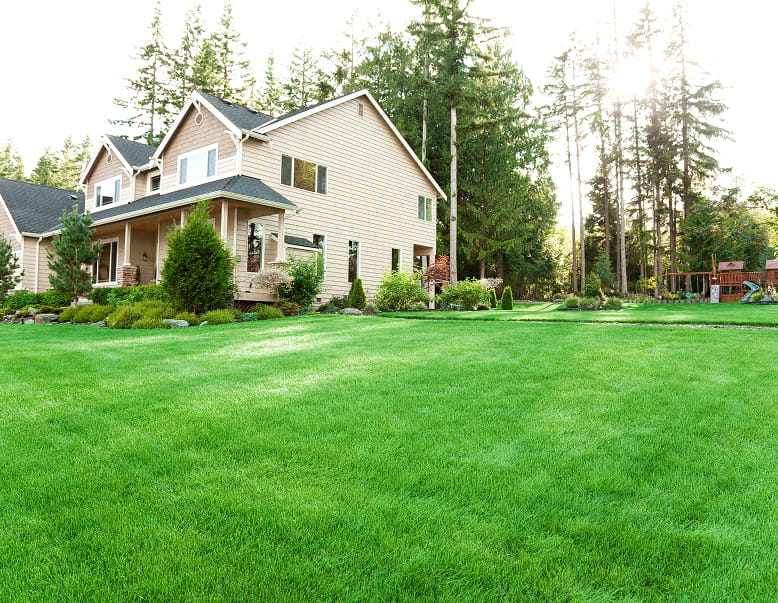
Most consumer fertilizers are quick-release. They dump their nitrogen into the soil within a few days of being applied, the lawn turns dark green for two weeks, and then it fades back to where it started. The lawn isn't actually any healthier. You've bought yourself a temporary colour change and a higher risk of runoff in the meantime.
Slow-release fertilizers (the ones we use) release their nitrogen over six to eight weeks. The lawn greens up gradually and stays that way. The nitrogen is taken up by the plant rather than washing into the storm drain. Slow-release products cost more per bag, but they apply at lower rates and produce better long-term results, so the cost per season works out close to the same.
The Four-Step Program
A healthy cool-season lawn needs four fertilizer applications a year, timed to soil temperature and the local growing season. Skipping any one of them leaves a gap in the lawn's growth cycle.
-
Spring Application (Mid to Late May)
Timing matters more than amount. We don't fertilize until soil temperature is consistently 12 to 15 degrees Celsius, which in our area usually means mid-May. Properties up on the moraine warm up a bit faster than properties on the heavier till. The application is a balanced slow-release nitrogen formula that wakes the root system up and drives an even green-up without forcing a flush of soft, weak growth.
-
Light Summer Application (Late June)
Cool-season grasses slow down in the heat of July and August. We don't push them with heavy fertilizer during that stress. A light application in late June carries the lawn through summer without forcing growth that would just stress the plant further. We use a slow-release product so the nitrogen releases over six to eight weeks rather than all at once.
-
Fall Application (Early to Mid September)
This is the application that most directly drives the next year's lawn health. September is when cool-season grass is happiest. The soil is still warm from summer, the air temperatures are dropping, and the grass shifts its energy from blade growth into root growth. A balanced fall application supports that root development. It's also the application we time with aeration and overseeding. The fertilizer hits the freshly aerated soil and feeds the new seedlings as they germinate.
-
Winterizer (Late October to Early November)
The single most important application of the year. The grass takes the nutrients down into the root system and stores them through dormancy. Lawns that get this come out of winter dramatically thicker than lawns that miss it. The window is narrow, between when growth has slowed but before the ground freezes hard, usually late October to mid-November in our area.
How We Match the Program to Your Property
Two lawns on the same street can need different fertilizer schedules. We assess every property before we start, and we adjust based on:
Soil type
Sandy moraine soils leach nutrients faster than heavier till and benefit from slightly more frequent, lower-dose applications.
Sun exposure
Heavily shaded lawns need less nitrogen than full-sun lawns. Pushing them with the same program produces weak, leggy growth that's prone to disease.
Existing condition
A thin, recovering lawn needs different inputs than a thick, established one.
Irrigation
Irrigated lawns can handle more growth than non-irrigated lawns and can be fed more aggressively.
Mowing practices
Lawns where the customer mulches clippings rather than bagging them get roughly 30 percent of their nitrogen back from the clippings, and we adjust the program accordingly.
Frequently Asked questions
How is your fertilizer program different from a four-step plan from the hardware store?
Three main differences. We use phosphate-free formulations because we're in the Lake Simcoe watershed. We time applications to soil temperature rather than the calendar, which matters because Aurora's elevation can put our spring meaningfully behind Toronto's. And we use slow-release products rather than the quick-release products in most consumer bags, so the lawn improves over the season rather than just briefly looking greener.
Can I just fertilize myself and skip the program?
You can. The honest answer is that most homeowners who try eventually come back to a service because the timing is hard to nail without doing it for a living, and the wrong timing wastes the product. If you're committed to doing it yourself, the most important rule is to wait until soil temperatures are right rather than fertilizing on a calendar date.
Do you use organic fertilizer?
We can. Some customers specifically request organic-only programs and we accommodate that. Most of our standard slow-release products are synthetic but environmentally responsible. Both work. Pure organic programs cost more and produce results more slowly, but for properties with specific sensitivities (heavy pet use, well water concerns) they're often the right choice.
Is the fertilizer safe for kids and pets?
Yes. We follow label re-entry times and provide post-application instructions every time. For most products we use, the lawn is safe to walk on once the granules have been watered in, typically the next day.
Will fertilizing kill my weeds?
No. Fertilizer feeds the lawn, not the weeds, but it doesn't actively kill weeds either. Dense, well-fed turf is the best long-term defence against weeds, and our weed control program handles the ones already established.
What's the soil pH situation in Newmarket and Aurora?
Most soils in our area run slightly acidic to neutral, which is what cool-season grasses prefer. We do soil tests on properties where we suspect a problem (chronic moss, persistent yellowing, salt-damaged areas) and adjust with lime or sulphur if needed. For most properties, no adjustment is necessary.
Ready to Get Started?
A well-fed lawn in Newmarket or Aurora is also a lawn that crowds out weeds, recovers from damage, and handles winter dormancy without the spring catch-up most lawns need. Free quote, no obligation.
Request Your Free Lawn Care Quote Call (905) 503-3000