Lawn Overseeding in Newmarket and Aurora
Why Even Healthy Lawns Need Overseeding
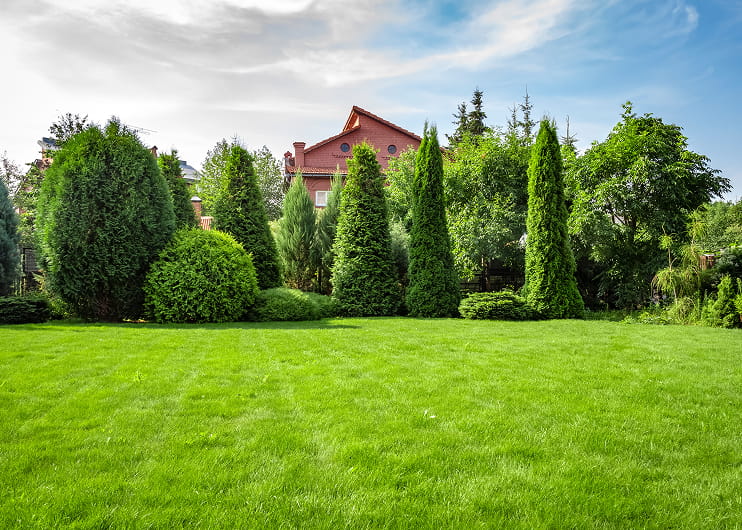
Every lawn loses density over time. Dry summers, dog spots, kids in cleats, salt damage along the driveway, snow mould scars in spring, shade from maturing trees. Anywhere the existing grass thins out, weeds will move in to fill the space.
Overseeding is how we get ahead of that, by broadcasting fresh seed into the existing lawn so new grass establishes faster than the weeds can.
It's one of the four pillars of our Newmarket and Aurora lawn care program, and it's the service that produces the biggest visible improvement in the shortest amount of time.
A lawn that gets aerated and overseeded in September often looks dramatically thicker by the time the snow flies.
The Reasons Lawns Thin Out Around Here
Knowing what we're trying to fix matters as much as picking the right seed. Across Newmarket and Aurora properties, the patterns we see most often:
- Salt damage. Anywhere the city plow piles snow loaded with road salt, the boundary between the driveway and the lawn becomes a dead strip by April. Same thing along the city sidewalk. Heavy salt loads kill the grass and leave the soil chemistry hostile to new growth. Overseeding alone won't fix it. We typically flush the soil with water and apply gypsum first, then overseed once the chloride has moved out of the root zone.
- Snow mould scars. Pink and grey snow mould patches show up in spring where the snow piled deepest, leaving matted circular dead areas. Most green back up on their own with the spring fertilizer round, but the worst ones need overseeding to fully recover.
- Summer thinning on sandy soils. Higher-elevation properties in Aurora are often on or near the moraine, with sandy soils that drain fast and dry out fast. Without irrigation, these lawns thin out by August and need fall overseeding to bounce back.
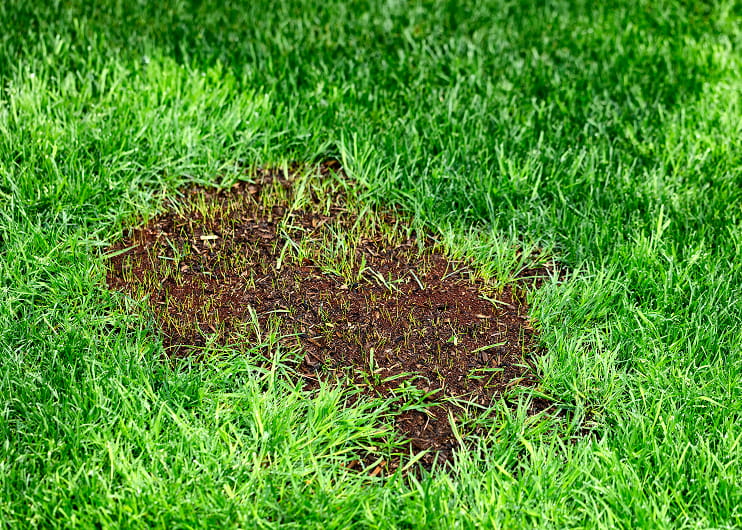
- Dog spots. The concentrated nitrogen in dog urine burns the grass in circles. Spot overseeding (after flushing the area with water) brings them back in three to four weeks.
- Compaction-driven thinning. When aeration hasn't been done in a while, the soil gets so tight that the existing lawn slowly loses density even with no specific damage. Aeration plus overseeding together is the fix.
- New tree shade. The streetscapes in older parts of Aurora and Newmarket are thick with mature maples and oaks. As those canopies fill in, lawns underneath them thin out from light deprivation. Overseeding with a heavier fine fescue percentage extends the life of those lawns by years.
The Seed Mix We Use and Why
We don't use a single grass species. Cool-season lawns in Zone 5b do better with a blend, where each species handles a different stress and the lawn as a whole becomes more resilient.
Our standard overseed mix is built around three grasses:
- Kentucky bluegrass. The backbone of the lawn. Kentucky bluegrass spreads through underground stems called rhizomes, which means it actively fills bare spots over a couple of seasons rather than just standing where it germinated. It also handles winter dormancy as well as any cool-season grass on the market. The drawback is that it's slow to germinate (14 to 21 days from seed) and slow to establish, which is why we don't use it alone.
- Fine fescue. A blend of creeping red fescue, chewings fescue, and hard fescue. The fescues are our shade and drought specialists. They handle the dry, sandy areas common on properties up on the moraine, and they tolerate the partial shade under maturing trees better than bluegrass does.
- Perennial ryegrass. The fast-establishing component. Perennial ryegrass germinates in 7 to 10 days, which means it holds the lawn together visually while the slower bluegrass and fescue establish underneath. It's also one of the more wear-tolerant grasses, which matters on properties with kids and pets.
The exact percentages of each component get adjusted based on what we see at the property. Heavy shade, moraine sand, full sun on a south-facing front yard, and irrigated versus non-irrigated all change the right blend.
When to Overseed
September is the prime window for our area. Soil temperatures are still warm enough for fast germination (10 to 14 days for the ryegrass component, three weeks for the bluegrass), and the falling air temperatures favour cool-season grass over the heat-loving annual weeds. Most years we run our overseed program from the first week of September through the first week of October.
Late spring is the secondary window. We use it for properties that need urgent recovery (severe winter damage, large bare areas) or that we couldn't get to the previous fall. Spring overseeding works, but it's never quite as effective as fall because the new grass has to establish through the heat stress of summer.
We don't overseed in summer. The seedlings can't handle the heat, and the watering required to keep them alive is impractical for most homeowners.
How Aeration and Overseeding Work Together
Broadcasting seed onto an existing lawn isn't ideal on its own. The seed sits on top of the thatch layer, much of it gets eaten by birds or washed away by rain, and germination rates are mediocre at best.
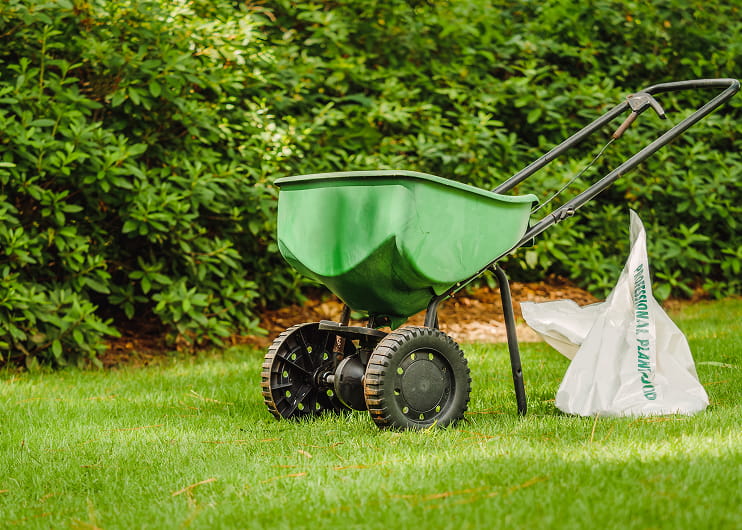
Broadcasting seed into a freshly aerated lawn is a different game entirely. The aeration leaves thousands of small openings in the soil, two to three inches deep. Seed broadcast over the lawn falls into those openings, where it has direct soil contact, protection from birds and runoff, and consistent moisture. Germination rates can be three to four times higher than seed broadcast onto undisturbed turf.
This is why we always recommend aerating and overseeding together rather than separately. Splitting them costs you most of the benefit of the overseed.
After Overseeding: Watering and Care
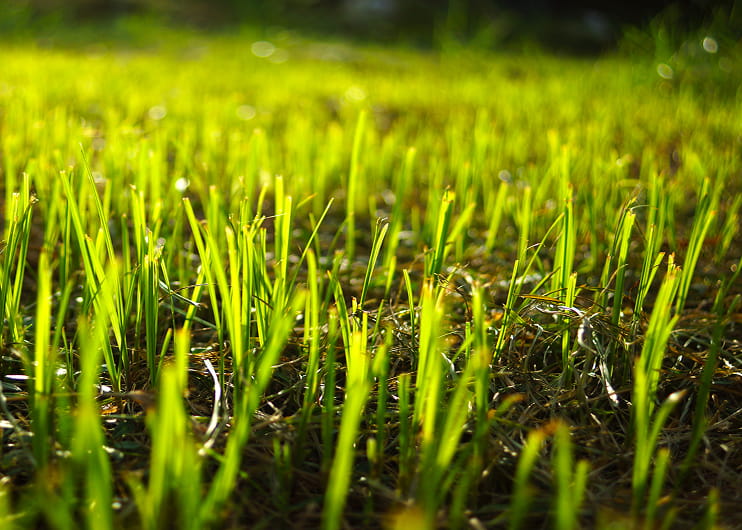
The first three weeks after overseeding are critical. The new seed needs consistent moisture to germinate and establish. We give every customer specific instructions for their property, but the general pattern is:
- Days 1 through 14: Light watering twice a day, just enough to keep the surface damp. Never enough to puddle or run off.
- Days 14 through 28: Reduce to once a day as the seedlings establish.
- Day 28 onward: Switch to deeper, less frequent watering as the new grass roots reach down into the soil.
We also recommend holding off on the first mowing until the new grass is at least three inches tall, then taking off no more than the top third of the blade. Heavy traffic, including dog activity, should be kept off the seeded areas for the first month if possible.
Frequently Asked Questions
How often should I overseed my lawn?
Annual overseeding (paired with aeration) is what we recommend for most Newmarket and Aurora properties. It keeps the lawn dense enough to crowd out weeds and stays ahead of the slow density loss every cool-season lawn experiences over time.
Can I overseed without aerating first?
You can, but the germination rate drops significantly. If you're going to overseed, the cost-effective move is to aerate at the same time. The seed-to-soil contact from aeration is what makes overseeding actually work.
What's the difference between overseeding and reseeding?
Overseeding is broadcasting seed into an existing lawn to thicken it. Reseeding is starting over on an area that's mostly dead. We do both, depending on what the property needs.
Will overseeding crowd out my existing grass?
No. The new seed fills in the bare and thin areas. The existing grass stays where it is. Over a couple of seasons, the lawn becomes more uniform as the new grass blends with the old.
Do you guarantee germination?
We guarantee that we use high-quality seed, apply it correctly, and time it right for the season. Germination depends partly on what happens after we leave (watering, weather, traffic). We give detailed aftercare instructions, and if those are followed, you should see strong germination within two to three weeks.
What about adding clover to my lawn?
Some homeowners ask about adding microclover to the seed mix. Clover fixes its own nitrogen, stays green during summer drought, and supports pollinators. It's a legitimate option for environmentally conscious properties and reduces fertilizer needs over time. We can include it in the mix on request.
Ready to Thicken Your Lawn?
If your Newmarket or Aurora lawn has thin patches, salt damage, snow mould scars, or has just been losing density year over year, fall overseeding is the most cost-effective way to turn it around. Free quote, no obligation.
Get a Quote Call (905) 503-3000